
 By fork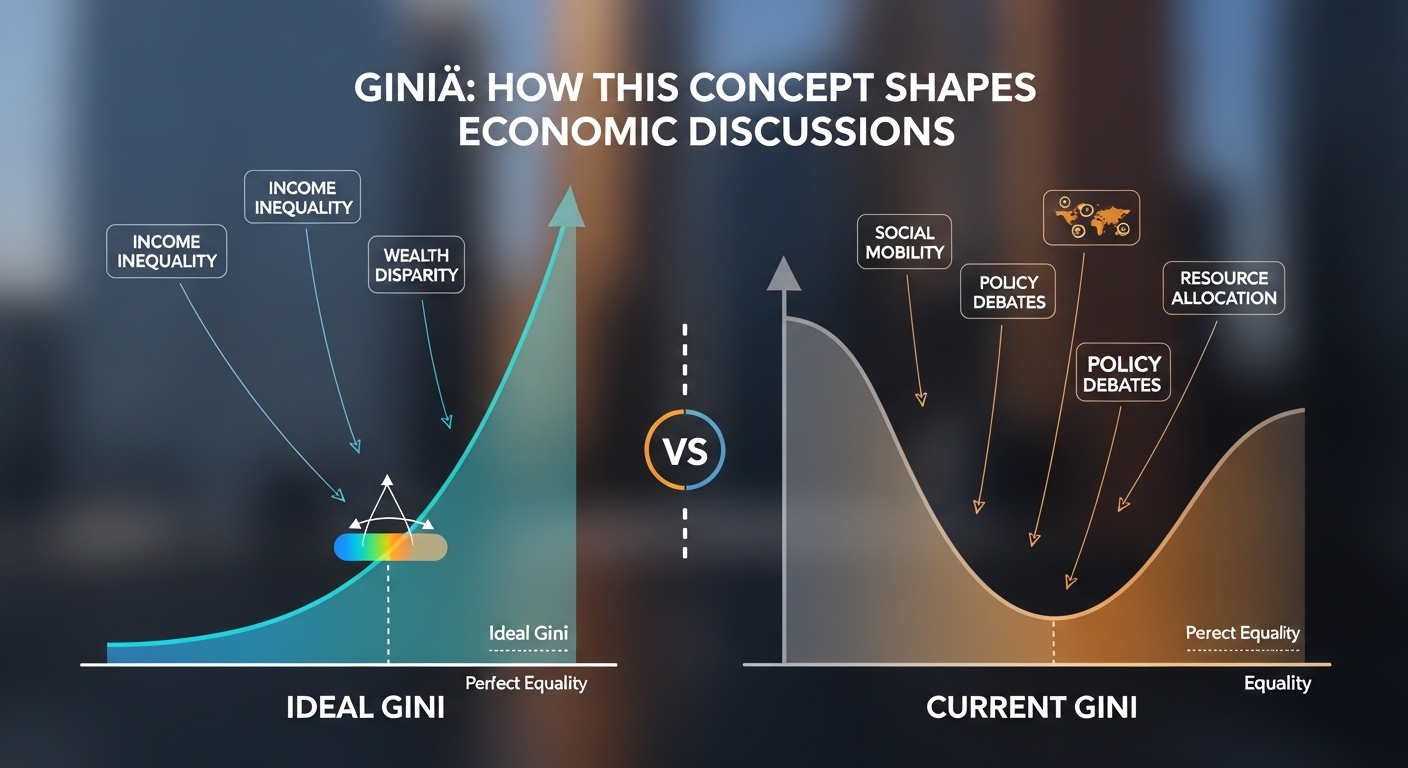
Economic discussions often revolve around numbers, statistics, and complex theories. Among these figures, one concept stands out: Giniä. This measure of economic inequality has become a cornerstone in debates about wealth distribution and social justice. But what exactly does Giniä represent? Why is it so crucial to understand its implications? As we dive into the world of Giniä, we’ll explore its origins, how it measures disparities in wealth, and the controversies it raises. Whether you’re an economics enthusiast or just curious about societal impacts on daily life, this exploration promises insights that matter. Let’s unravel the layers behind Giniä and see why it shapes conversations about our economy today.
What is Giniä?
Giniä, often referred to as the Gini coefficient, is a statistical measure used to gauge economic inequality within a society. It quantifies how wealth or income is distributed among individuals or households.
The value of Giniä ranges from 0 to 1. A score of zero indicates perfect equality, where everyone has the same income. Conversely, a score of one represents complete inequality, with one person holding all resources while others have none.
This concept serves as a vital tool for economists and policymakers alike. By providing insight into wealth distribution patterns, Giniä helps identify disparities that can lead to social unrest and economic instability. Understanding this measurement allows for informed discussions about policy changes aimed at reducing inequality and fostering more equitable societies.
Its History and Origin
The Gini coefficient, often referred to as Giniä, has roots tracing back to the early 20th century. It was developed by Italian statistician Corrado Gini in 1912. His work aimed at quantifying income inequality within a population.
Gini initially presented his findings in a paper that analyzed wealth distribution. The concept quickly gained traction among economists and statisticians for its simplicity and effectiveness.
By introducing this measure, Gini provided a tool that enabled clearer discussions about economic disparity. His formula calculates the area between the Lorenz curve and perfect equality line, translating complex social issues into digestible numerical values.
Over time, various countries adopted this metric to evaluate their own levels of inequality. As debates around wealth distribution intensified globally, Giniä emerged as an essential reference point in economic research and policy-making.
How it Measures Economic Inequality
Giniä, represented by a value between 0 and 1, provides a clear snapshot of economic inequality. A Gini coefficient of 0 indicates perfect equality, where everyone has the same income. Conversely, a score of 1 signifies extreme inequality with one individual earning all the wealth.
To calculate this measure, analysts use data on income distribution within a population. They plot cumulative percentages of total income against cumulative percentages of the population on a graph known as the Lorenz curve. The degree to which this curve deviates from an equal line illustrates disparities in wealth distribution.
By assessing changes in the Gini coefficient over time or comparing it across countries, policymakers can gain insight into economic trends and social justice issues. This measurement serves as a crucial tool for understanding how wealth is distributed and identifying areas needing intervention.
Controversies Surrounding Giniä
The Giniä coefficient, while widely used, has drawn considerable scrutiny. Critics argue it oversimplifies economic inequality. By boiling down complex data into a single number, some believe it can obscure meaningful nuances.
Geographic variations also create issues. A country with a low Giniä might still have significant disparities in wealth distribution between urban and rural areas. This phenomenon often goes unnoticed when focusing solely on the coefficient.
Moreover, detractors point out that Giniä doesn’t account for other dimensions of inequality like access to education or healthcare. These factors are crucial for understanding the broader socioeconomic landscape but remain outside the scope of this metric.
There’s concern regarding its application in policy-making. Relying heavily on one statistic may lead to misguided decisions that fail to address deeper systemic problems within an economy or society at large.
Real World Applications and Impact
Giniä plays a pivotal role in shaping policies around the globe. Governments and organizations rely on this metric to assess economic disparities within their populations.
For instance, countries with high Gini coefficients often face social unrest and demand for reform. Policymakers can identify these trends early, allowing proactive measures to address inequality.
In business, companies use Giniä to evaluate market potential. Understanding income distribution helps brands tailor products and services effectively.
Moreover, NGOs utilize Gini contracts for targeted interventions in impoverished regions. They focus resources where the need is greatest, amplifying their impact on communities.
Academics also leverage Giniä in research studies about wealth concentration over time. This insight fosters deeper discussions regarding long-term sustainability within economies.
By illustrating patterns of inequality, Giniä becomes more than just a number; it influences real change across various sectors worldwide.
Criticisms and Alternatives to Giniä
Giniä has faced its share of criticisms over the years. One major concern is that it simplifies complex economic realities into a single number. This reduction can overlook important details about wealth distribution.
Another critique revolves around Giniä’s insensitivity to the middle class. The index may not reflect income shifts among this group, masking disparities that affect their well-being significantly.
Alternatives have emerged to address these gaps. The Palma ratio focuses on the income share of the top 10% compared to the bottom 40%. This method provides a more nuanced view of inequality dynamics.
The Atkinson index adds another layer by incorporating societal preferences for equality, allowing for varied sensitivity levels towards income differences. These alternatives can offer deeper insights into economic disparity and complement or challenge Giniä’s findings effectively.
The Importance of Understanding Giniä in Economic Discussions
Understanding Giniä is crucial in today’s economic landscape. It offers a clear snapshot of income distribution within a society, making it easier to identify inequalities.
As discussions around wealth disparity become more prominent, knowledge of Giniä helps frame these conversations. Policymakers and economists rely on this metric to devise strategies aimed at reducing inequality.
Moreover, Giniä transcends simple numbers; it reflects social justice issues that affect people’s lives daily. This insight can drive advocacy efforts for equitable reforms.
When citizens grasp the implications behind their country’s Giniä coefficient, they engage more meaningfully in debates about taxation and welfare systems.
Incorporating this understanding into economic discussions empowers communities to demand change and hold leaders accountable for addressing disparities effectively.
Conclusion
Giniä is more than just a statistical measure; it’s a lens through which we can examine economic inequality. Recognizing its history and the way it quantifies disparities allows for deeper discussions about wealth distribution.
Understanding Giniä equips us to engage in important conversations about policy and social justice. Despite criticisms, its applications in real-world scenarios remain vital for economists, policymakers, and citizens alike.
As we navigate complex economic landscapes, grasping the nuances of Giniä will help foster informed debates on addressing inequality. Whether you’re an academic or simply someone interested in the economy, knowing this concept can enrich your perspective on socio-economic issues that matter today.